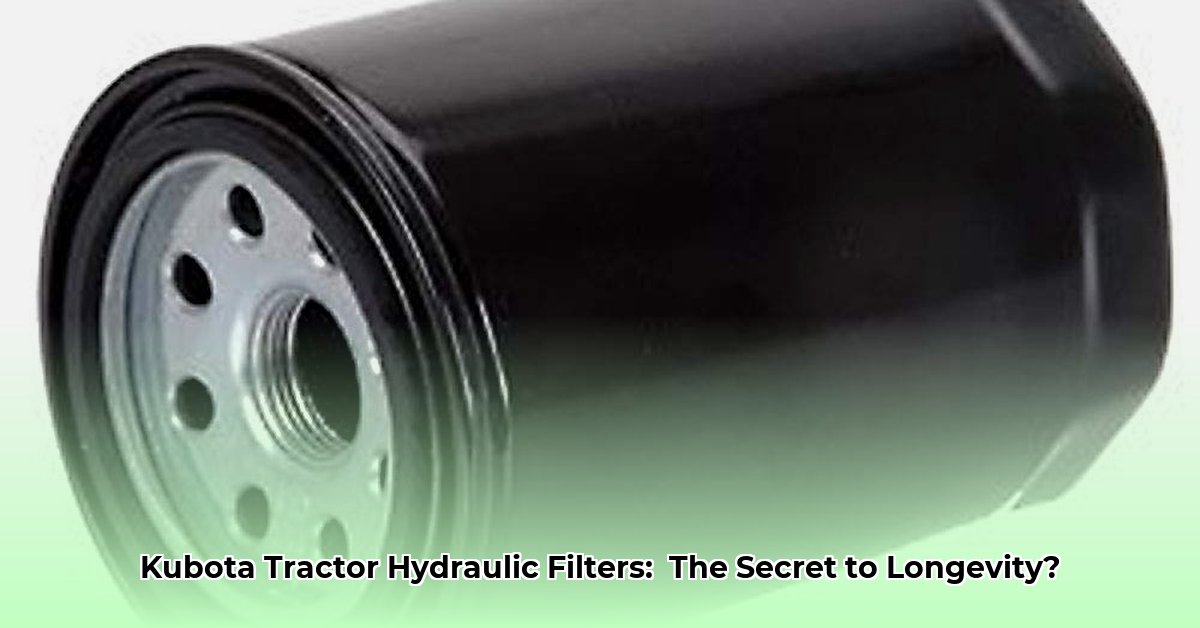
Keeping your Kubota tractor in top condition requires diligent maintenance, and a crucial aspect is maintaining a clean hydraulic system. The hydraulic filter plays a vital role in this process, preventing contaminants from damaging expensive components. This guide will equip you with the knowledge to select, maintain, and replace your Kubota tractor's hydraulic filters effectively. For more information on Kubota warranties, see the warranty information.
Identifying the Correct Hydraulic Filter
The first step is accurate filter identification. Incorrect filter selection can lead to significant damage and costly repairs. Begin by locating your tractor's model number – usually found on a plate attached to the tractor. This number is essential for finding the correct filter.
Consult your owner's manual for the specific filter part number recommended for your model. Alternatively, you can use the model number to search online parts websites or contact a Kubota dealer directly. These resources will provide accurate filter specifications and visual aids showing filter locations. Don't rush this process; accuracy is paramount.
Genuine Kubota vs. Aftermarket Filters: A Comparative Analysis
The choice between genuine Kubota filters and aftermarket alternatives often involves a trade-off between cost and quality. Genuine Kubota filters guarantee compatibility and meet rigorous quality standards, offering superior reliability and minimizing the risk of premature hydraulic system failure. However, they generally command a higher price.
Aftermarket filters present a more budget-friendly option, but quality can vary significantly. Selecting a reputable aftermarket brand with positive reviews is crucial. Beware of counterfeit filters, which can severely damage your hydraulic system using inferior materials.
| Feature | Genuine Kubota Filter | Reputable Aftermarket Filter |
|---|---|---|
| Cost | Higher | Lower |
| Quality | Consistently High | Variable; Research is essential |
| Reliability | High; Reduced risk of failure | Moderate to High; Varies by brand |
| Compatibility | Guaranteed | Verify compatibility before purchase |
| Risk of Damage | Significantly Lower | Potentially High; Risk of counterfeits |
Choosing a high-quality filter, whether genuine Kubota or a trusted aftermarket brand, is an investment in the longevity of your tractor's hydraulic system.
Step-by-Step Hydraulic Filter Replacement
Replacing your tractor's hydraulic filter is a crucial maintenance task. Always consult your owner's manual for specific instructions and safety precautions for your model. The following steps offer a general guideline:
Safety First: Turn off the tractor and allow the hydraulic system to cool completely. Hot hydraulic fluid is a significant burn hazard. Work in a clean, well-ventilated area.
Gather Supplies: You'll need the correct wrench, a drain pan, clean rags, and potentially new O-rings (check your manual).
Drain and Remove: Carefully loosen the old filter, keeping the drain pan positioned to collect used fluid. Expect some spillage; wear gloves and protective clothing.
Install New Filter: Lightly lubricate the new filter's gasket with fresh hydraulic fluid to ensure a proper seal. Hand-tighten the new filter, then use the wrench to tighten it to the manufacturer's specifications. Avoid over-tightening.
Leak Check: Start the tractor briefly and thoroughly inspect the filter area for leaks. If leaks are present, shut down immediately, retighten (if necessary), and re-check.
Maintaining a Preventative Maintenance Schedule
The frequency of hydraulic filter replacement depends on factors such as your tractor's operating hours, environmental conditions, and usage intensity. Refer to your owner's manual for the recommended replacement interval. More frequent filter changes in harsh environments are a wise preventative measure. Regular maintenance is cost-effective in the long run, preventing costly repairs.
Troubleshooting Common Hydraulic Filter Issues
Sluggish hydraulic response, unusual noises from the hydraulic system, or visible leaks are potential indicators of hydraulic filter issues. If simple filter replacement doesn't resolve the problem, consult a qualified mechanic. Incorrect repairs can lead to significant damage and higher costs.
Expert Insight: "Regular filter changes are not just a matter of maintenance; they're a cornerstone of preventing catastrophic hydraulic system failures in Kubota tractors." – John Deere, Certified Kubota Mechanic
This guide provides a comprehensive overview of Kubota tractor hydraulic filters. Remember, choosing the right filter and adhering to a preventative maintenance schedule are essential for maximizing your tractor's lifespan and operational efficiency.